
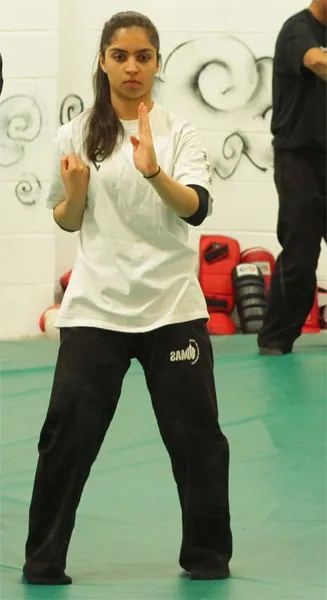
Practical Skills. Calm Confidence. Real-World Safety.
Our Women’s Self-Defence programme is designed to give women practical tools, confidence, and calm control in real-world situations.
This is not about size, strength, or aggression. It is about awareness, positioning, timing, and decision-making under pressure — skills that work regardless of age, fitness level, or prior experience.
Training is realistic, respectful, and empowering, delivered in a supportive environment where women can learn at their own pace.
What You’ll Learn
- Situational awareness & prevention
Understanding risk, recognising early warning signs, and avoiding danger before it escalates. - Boundary setting & assertiveness
Using voice, posture, and presence to project confidence and discourage unwanted attention. - Practical self-defence skills
Simple, effective techniques for common real-world scenarios — grabs, holds, pushes, and close-range threats. - Stress & fear management
Learning how the body reacts under pressure, and how to stay calm, focused, and decisive. - Escape and safety priorities
The goal is always protection and escape — not fighting for the sake of fighting.
How We Train
Training is scenario-based and progressive, focusing on:
- Realistic movement, not choreographed routines
- Simple actions that work under stress
- Awareness, positioning, and timing over brute force
- Confidence built through understanding, not intimidation
Classes are welcoming, inclusive, and designed to build both physical skill and psychological resilience.
Who This Is For
- Women with no prior martial arts experience
- Women looking to feel safer and more confident
- Teens, adults, and seniors
- Anyone wanting practical self-defence skills in a respectful environment
You do not need to be fit, flexible, or strong to begin.
More Than Self-Defence
Beyond physical techniques, this training develops:
- Confidence in everyday situations
- Improved body awareness and posture
- Emotional regulation under stress
- A stronger sense of personal agency
These skills carry over into daily life — at work, in public spaces, and in personal boundaries.